Agentic AI: The Smart Home Revolution That Acts on Its Own
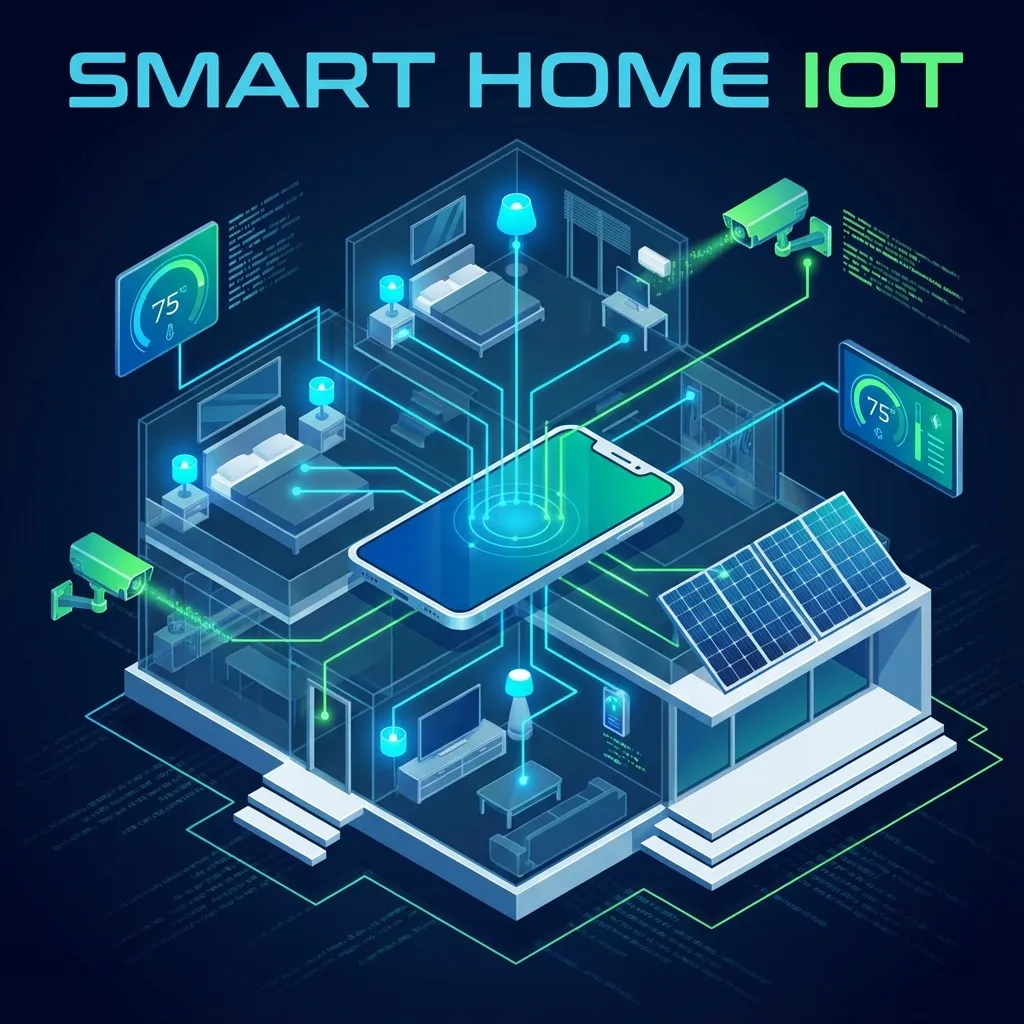
Your smart home so far might only wait for commands: "Turn on the lights," "Lower the AC temperature," or "Lock the door." But what if your home could make decisions on its own? This is the promise of Agentic AI — a new generation of artificial intelligence that doesn't just respond, but also plans and executes complex tasks autonomously on local devices without always depending on the cloud.
What Is Agentic AI and How Does It Differ from Generative AI?
Before diving deeper, it's important to understand the fundamental difference between these two types of AI that are currently being widely discussed:
| Aspect | Generative AI | Agentic AI |
|---|---|---|
| Main Function | Generates content (text, images, audio) | Plans & executes tasks |
| Interaction | Reactive (waits for prompts) | Proactive (takes initiative) |
| Dependency | Usually needs cloud connection | Can run on edge/local device |
| Examples | ChatGPT, Midjourney | Auto-GPT, BabyAGI, autonomous IoT agents |
Generative AI like ChatGPT or DALL-E excels at generating creative content, but they're passive — they only work when you give specific commands.
Agentic AI, on the other hand, is a system that can:
- Understand general objectives ("keep the home efficient")
- Break down objectives into smaller steps
- Execute those steps sequentially
- Learn from outcomes and adjust strategies
Tip: Agentic AI isn't a replacement for Generative AI, but an evolution. Many modern systems combine both — using generative models to understand context, then agents for execution.
How Agentic AI Works in Smart Homes
Imagine this scenario: Your AC starts making unusual noises. With a traditional system, you'd only know there's a problem when the AC breaks down completely or when you receive a bloated electricity bill.
With Agentic AI + IoT sensors, here's what happens:
1. Automatic Anomaly Detection
Sound and vibration sensors in the AC unit continuously monitor operational patterns. When detecting abnormal frequencies:
# Simple anomaly detection example with ML on edge
import numpy as np
from sklearn.ensemble import IsolationForest

class ACAnomalyDetector:
    def __init__(self):
        self.model = IsolationForest(contamination=0.1)
        self.is_trained = False

    def train(self, normal_sounds):
        """Train model with normal sound data"""
        self.model.fit(normal_sounds)
        self.is_trained = True

    def detect(self, current_sound):
        """Detect anomalies: -1 = anomaly, 1 = normal"""
        if not self.is_trained:
            return None
        prediction = self.model.predict([current_sound])
        return prediction[0] == -1

# Usage
detector = ACAnomalyDetector()
detector.train(historical_normal_data)
if detector.detect(current_audio_features):
    print("⚠️ Anomaly detected! Scheduling maintenance...")
2. Autonomous Diagnosis
The agent doesn't just detect "there's a problem," but also analyzes possible causes:
- Dirty filter → needs cleaning
- Refrigerant leak → needs technician
- Worn fan motor → needs part replacement
3. Autonomous Action Execution
After diagnosis, the agent can:
- Send notifications to the owner via WhatsApp/email
- Schedule service with certified providers
- Order spare parts automatically if needed
- Adjust settings temporarily for efficiency
// Example agentic workflow for AC maintenance
const maintenanceWorkflow = {
  trigger: 'ac_anomaly_detected',
  steps: [
    { action: 'notify_owner', channel: 'whatsapp' },
    { action: 'diagnose_severity', method: 'ml_classifier' },
    {
      condition: 'severity > 0.7',
      actions: [
        { action: 'schedule_service', provider: 'preferred_vendor' },
        { action: 'order_parts', if_needed: true }
      ]
    },
    { action: 'adjust_temp_settings', target: 'energy_efficient_mode' }
  ],
  learning: {
    feedback_loop: true,
    store_outcome: true,
    update_policy: 'reinforcement_learning'
  }
};
Important: All the processes above can run locally on the device (edge AI) without sending sensitive data to the cloud, enhancing privacy and response speed.
Setting Up Agentic AI for Your Smart Home
Want to start implementation? Here's a practical roadmap:
Step 1: Gather Sensor Data
Ensure your IoT devices have relevant sensors:
- Temperature & humidity sensors → HVAC monitoring
- Sound/vibration sensors → Machine anomaly detection
- Power consumption sensors → Energy usage monitoring
- Cameras → Security & occupancy detection
Affordable hardware recommendations:
| Device | Function | Estimated Price | Link |
|---|---|---|---|
| ESP32 + Sensor Suite | Multi-sensor IoT node | $10-20 USD | ESP32 on Amazon |
| Raspberry Pi 4/5 | Edge computing hub | $55-80 USD | Raspberry Pi Official |
| Aqara Sensors | Zigbee smart sensors | $15-35 USD | Aqara Store |
Step 2: Deploy AI Models on Edge
To run Agentic AI on local devices, you need lightweight frameworks:
Option A: TensorFlow Lite (Most Popular)
# Install TensorFlow Lite on Raspberry Pi
pip install tflite-runtime

# Convert model from Python to TFLite
import tensorflow as tf

# Load pre-trained model
model = tf.keras.models.load_model('ac_anomaly_detector.h5')

# Convert to TFLite
converter = tf.lite.TFLiteConverter.from_keras_model(model)
tflite_model = converter.convert()

# Save
with open('ac_detector.tflite', 'wb') as f:
    f.write(tflite_model)
Reference: TensorFlow Lite Documentation
Option B: ONNX Runtime (Cross-Platform)
# Install ONNX Runtime
pip install onnxruntime

# Run inference on edge
import onnxruntime as ort
import numpy as np

session = ort.InferenceSession("model.onnx")
input_name = session.get_inputs()[0].name
output = session.run(None, {input_name: sensor_data})
Reference: ONNX Runtime
Step 3: Build Agents with Autonomous Logic
Popular frameworks for Agentic AI:
- LangChain - Most mature framework for LLM + tools orchestration
- AutoGen - Multi-agent conversation framework from Microsoft
- CrewAI - Role-based agent collaboration
Simple example with LangChain:
from langchain.agents import initialize_agent, Tool
from langchain.llms import Ollama  # Local LLM running on edge

# Define tools the agent can use
tools = [
    Tool(
        name="SendNotification",
        func=send_whatsapp_message,
        description="Send notification to owner via WhatsApp"
    ),
    Tool(
        name="ScheduleService",
        func=schedule_maintenance_service,
        description="Schedule service with vendor"
    ),
    Tool(
        name="OrderParts",
        func=order_spareparts_online,
        description="Order spareparts from e-commerce"
    )
]

# Initialize agent with local LLM (privacy-first!)
llm = Ollama(model="llama3.2", base_url="http://localhost:11434")
agent = initialize_agent(tools, llm, agent_type="zero-shot-react-description")

# Run the agent
response = agent.run("AC anomaly detected, take necessary actions")
Full reference: LangChain Agents Documentation
Step 4: Monitoring & Continuous Learning
Agentic AI must continuously learn from its action outcomes:
# Simple reinforcement learning feedback loop
class AgentLearner:
    def __init__(self):
        self.success_rate = {}

    def record_outcome(self, action, outcome, reward):
        """Record action outcomes for learning"""
        if action not in self.success_rate:
            self.success_rate[action] = []
        self.success_rate[action].append({
            'outcome': outcome,
            'reward': reward  # +1 for success, -1 for failure
        })

    def get_best_action(self, situation):
        """Choose action with highest reward for this situation"""
        # Implement policy optimization here
        pass
Implementation Challenges and Solutions
1. Resource Constraints on Edge Devices
Problem: IoT devices usually have limited RAM and CPU.
Solution:
- Use quantized models (INT8 instead of FP32)
- Offload heavy computation to local gateway (e.g., Raspberry Pi)
- Use TinyML frameworks like Edge Impulse
2. Data Security & Privacy
Problem: Sensor data can contain sensitive information about residents' habits.
Solution:
- Federated Learning: Train models without data leaving the device
- Homomorphic Encryption: Process encrypted data
- Local-only processing: Don't send raw data to cloud
Read more: IoT Security Best Practices - OWASP
3. Error Handling & Fail-Safe Mechanisms
Problem: What if the agent makes wrong decisions?
Solution:
- Always have human-in-the-loop for critical decisions
- Implement confidence threshold — if confidence < X%, request human confirmation
- Create rollback mechanism to undo actions
# Example safety config
safety_config:
  confidence_threshold: 0.85
  human_approval_required:
    - order_above_amount: 100
    - schedule_during_holiday: true
    - modify_security_settings: always
  rollback_enabled: true
  max_auto_actions_per_day: 10
The Future: From Smart Home to Autonomous Home
In the next 2-3 years, we'll see significant evolution:
- Multi-Agent Collaboration: Not one agent, but teams of specialized agents (security agent, energy agent, maintenance agent) collaborating together
- Cross-Device Orchestration: Agents can coordinate across different brands thanks to universal standards like Matter
- Predictive Maintenance Level 2: Not just detecting problems, but predicting component lifespan and optimizing replacement timing
- Energy Trading Automation: Smart homes that automatically buy/sell surplus energy to the grid or neighbors
Insight: Companies like Google Nest, Amazon Alexa, and Apple HomeKit are already integrating agentic capabilities. Those left behind are legacy players still stuck in the "voice command only" model.
Conclusion
Agentic AI takes smart homes from the era of "homes that obey commands" to "homes that think and act independently." With the combination of IoT sensors, edge computing, and autonomous AI agents, you can have a digital housekeeper that's truly proactive — detecting issues before they occur, scheduling maintenance without being asked, and optimizing energy 24/7.
Implementation does require initial effort: hardware setup, AI model deployment, agent configuration. But the ROI is clear: energy savings, prevention of costly damages, and most valuably — peace of mind knowing your home literally takes care of itself.
This technology is no longer science fiction. The frameworks and tools are available today. The question is: are you ready to make the leap from conventional smart home to autonomous home?
Interested in more complex IoT implementations? Nafanesia provides consulting services and custom IoT solution development. Contact us.