Complete Guide to Choosing Tech Stack for Startups
Choosing the right tech stack is one of the most important decisions you will make as a startup founder. This decision will affect development speed, scalability, operational costs, and your ability to recruit talent.
What Is a Tech Stack?
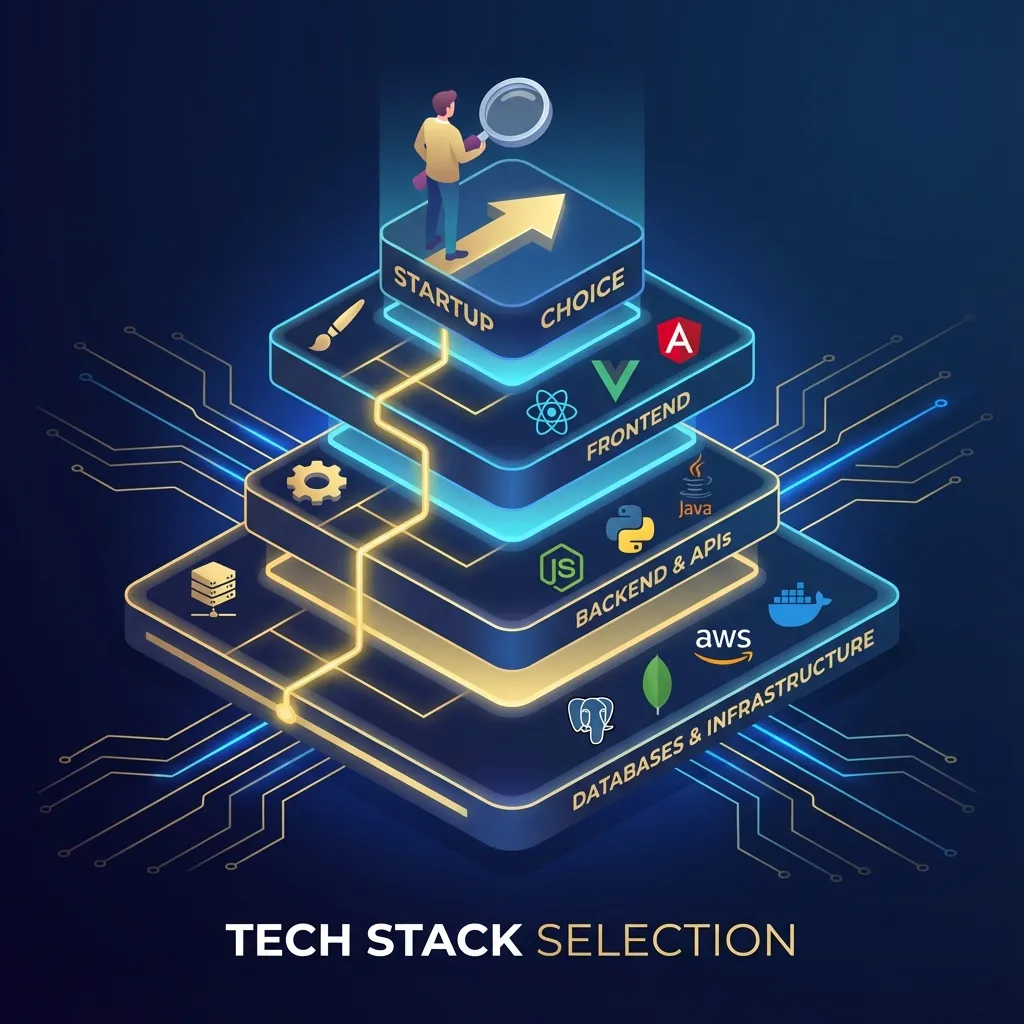
A tech stack is a combination of technologies used to build and run applications. This includes:
- Frontend: User interface technologies (React, Vue, Angular)
- Backend: Server-side logic (Node.js, Python, Go)
- Database: Data storage (PostgreSQL, MongoDB, Redis)
- Infrastructure: Hosting and deployment (AWS, GCP, Docker)
Factors in Choosing a Tech Stack
1. Project Requirements
First, clearly understand what you want to build:
- Is this a web app, mobile app, or both?
- What is the estimated number of users?
- What features are needed?
- Are there real-time requirements?
2. Timeline and Resources
Consider the time and resources available:
| Factor | Consideration |
|---|---|
| Deadline | Familiar tech stack develops faster |
| Budget | Some technologies have licensing costs |
| Team Size | Convention-based frameworks ease collaboration |
3. Scalability
Think about future growth:
- Can the technology handle 10x, 100x load?
- What about horizontal vs vertical scaling?
- Are there obvious bottlenecks?
Popular Tech Stacks for Startups
MERN Stack
MongoDB + Express.js + React + Node.jsAdvantages:
- Full JavaScript, one language for everything
- Large community and many resources
- Suitable for MVPs and quick prototypes
Best for: Early-stage startups, MVPs, real-time applications
Python + Django/FastAPI
Advantages:
- Clean and readable syntax
- Excellent for data science and ML
- Django provides many out-of-the-box features
Best for: AI/ML startups, complex backends
Go + React
Advantages:
- High performance
- Excellent concurrency
- Binary compilation, easy deployment
Best for: High-performance applications, microservices
Tech Stack Selection Checklist
Before deciding, make sure you have considered:
- Talent Availability - Is it easy to recruit developers?
- Community Support - Is there an active community?
- Documentation - Is documentation complete?
- Long-term Viability - Will this technology survive?
- Integration - Is it easy to integrate with other tools?
Common Mistakes to Avoid
"Premature optimization is the root of all evil" - Donald Knuth
Avoid these mistakes:
- Over-engineering: Building for scale that may never happen
- Chasing Trends: Using new technology without clear reasons
- Ignoring Team Skills: Choosing tech the team doesn't master
- Vendor Lock-in: Being too dependent on one provider
Nafanesia Recommendations
Based on our experience helping various startups, here are recommendations for common scenarios:
For Quick MVP
- Frontend: Next.js or React
- Backend: Node.js with Express or Fastify
- Database: PostgreSQL or Supabase
- Hosting: Vercel or Railway
For Enterprise Applications
- Frontend: React with TypeScript
- Backend: Go or Java Spring
- Database: PostgreSQL with Redis cache
- Infrastructure: Kubernetes on AWS/GCP
Conclusion
There is no "perfect" tech stack for all cases. The most important thing is to choose technology that:
- Matches project requirements
- Can be mastered by your team
- Has a clear scaling path
- Is supported by an active community
Need help choosing a tech stack for your startup? The Nafanesia team is ready to provide technical consultation. Contact us.